Introduction
When I began telling people that I wanted to move further into the world of AI and sustainability, I kept hearing a version of the same question:
How can you feel excited about AI when it also carries such a significant environmental burden?
It is a fair question, and one that stayed with me. Part of me has always been drawn to AI because of its potential. I see it as a powerful tool that could help us make better decisions, improve complex systems, and perhaps contribute to solving some of the challenges that matter most, including those linked to sustainability. But at the same time, the criticism is hard to ignore. AI is increasingly associated with rising electricity demand, water use, emissions, and infrastructure growth on a huge scale. For anyone who cares about sustainability, that’s an uncomfortable contradiction worth taking seriously. This article is my attempt to work through it honestly, drawing on current research across energy, infrastructure, and climate science.
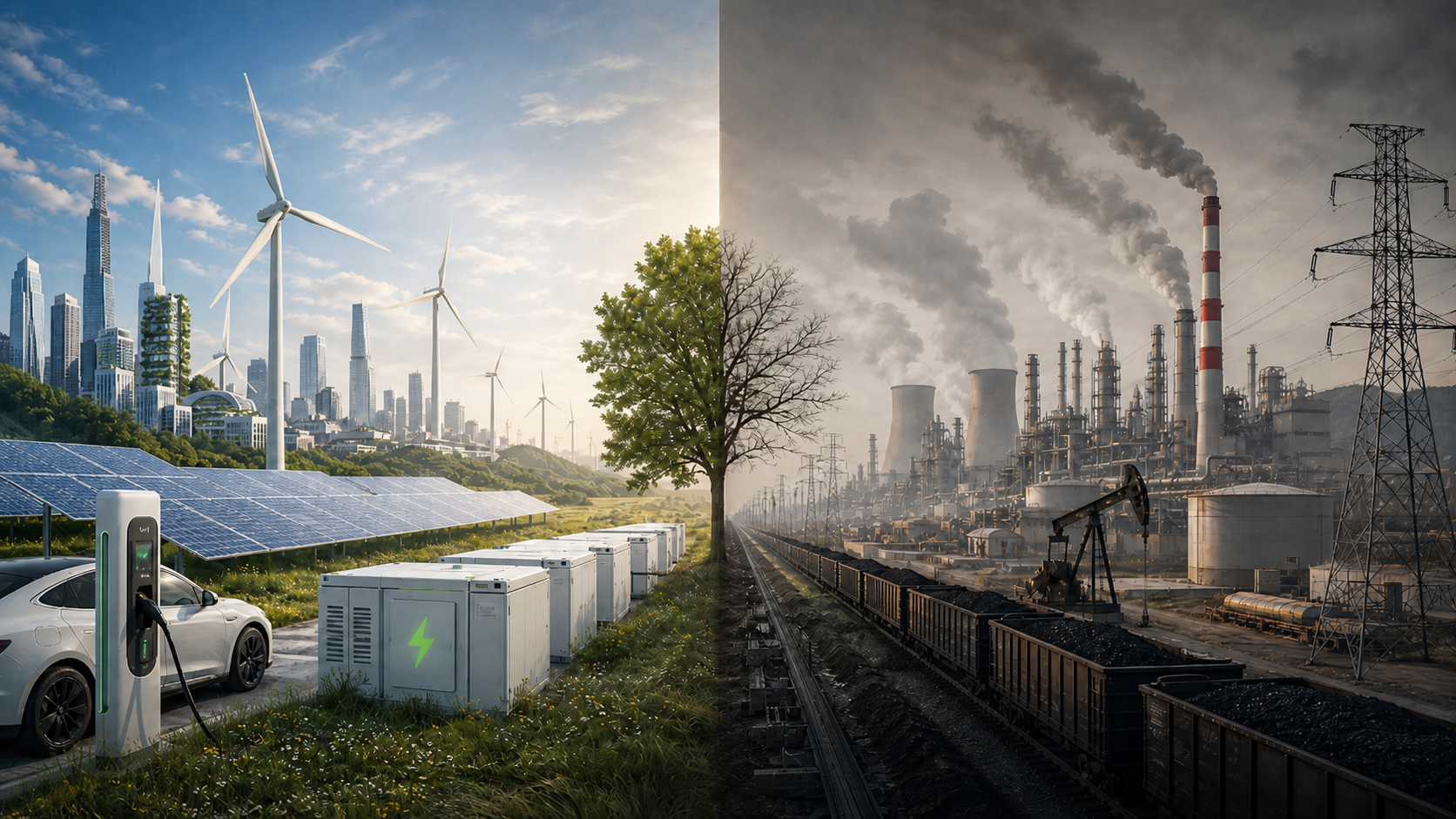
The more I read, the clearer it became that the debate is often framed too simply. Artificial intelligence in the space of sustainability is often described in two very different ways: as a tool that could help decarbonise economies, and as a fast-growing environmental burden in its own right. Both claims have evidence behind them. The clearest way to frame the issue is the one used by the Organisation for Economic Co-operation and Development (OECD) and by climate-and-AI researchers. It separates AI’s direct footprint, namely the energy, water, materials, and waste required to build, train, run, and retire systems, from its indirect effects, which can be positive or negative depending on how those systems are applied. That distinction organises most of what follows. A landmark assessment of AI and the Sustainable Development Goals found that AI could enable 134 targets while inhibiting 59. That is what makes AI and sustainability a “paradox”: AI is neither inherently green nor inherently harmful, but conditional on how it is built, used, and governed. The scale of this tension became clear as early as 2019, when Strubell, Ganesh and McCallum estimated that training a single large NLP model with neural architecture search could emit roughly 284,000 kg of CO₂, nearly five times the lifetime emissions of an average car, a figure that described an extreme case and that Patterson et al. later argued substantially overstated typical training costs. That finding helped launch a broader research agenda, later formalised by Schwartz, Dodge, Smith and Etzioni (2020) under the label “Green AI,” which called on the field to treat computational efficiency as a first-class evaluation criterion alongside accuracy.

Why AI Could Help Sustainability
The strongest case for AI is not that digital tools are somehow green by default. It is that machine learning can improve decisions inside complex, data-rich systems that already need to become more efficient and less carbon-intensive.
The applications that show up most consistently in the research are ones where the data problem is hard and the stakes are high: forecasting renewable generation, balancing electricity grids, optimising logistics and industrial processes, detecting methane leaks, improving land and water management, and accelerating scientific discovery in areas such as batteries and low-carbon materials. Peer-reviewed literature, notably the comprehensive survey by Rolnick et al. (2022) and the framework developed by Kaack et al. (2022), identifies a wide range of high-impact domains, including energy systems, transport, agriculture, buildings, industry, land use and disaster response, while stressing that AI’s climate effects need to be assessed holistically across computing impacts, immediate application effects and wider system consequences. Stern et al. (2025) attempt to quantify this potential, estimating that AI deployment across power, food and mobility alone could reduce emissions by 3.2–5.4 GtCO₂e per year by 2035, though it is worth noting that the study was produced in collaboration with Google and its estimates depend heavily on assumptions about policy support and adoption rates.
For me, what AI can unlock is perhaps the most intriguing and exciting. Beyond improving existing systems, AI may also help us uncover new solutions and insights that we cannot yet fully predict, not only for climate change, but for building a more sustainable world more broadly.
That potential is already visible in climate science itself. Google DeepMind’s GraphCast now produces 10-day global weather forecasts in under a minute, at a resolution competitive with the best physics-based models and at a fraction of the computational cost, while Huawei’s Pangu-Weather and Microsoft’s Aurora foundation model are pushing similar boundaries in atmospheric and Earth-system modelling. What interests me about these systems is less the speed itself than what the speed makes practical: forecasts that can be run more often, at lower cost, and by institutions that could not afford the equivalent physics-based modelling.
Concrete deployments are harder to find, but they exist. The United Nations Environment Programme’s Methane Alert and Response System uses machine learning to identify likely methane plumes in satellite imagery, allowing scientists to analyse thousands of images in minutes rather than days. According to UNEP, the system has issued over 1,200 cumulative notifications to companies and governments since launch, and those alerts helped prompt mitigation action. A growing number of start-ups are working along similar lines, applying AI to monitoring, forecasting and resource management problems that were previously too data-intensive to address at scale.
The literature is careful here, though, and I think rightly so. The evidence is considerably stronger for technical capability than for verified economy-wide emissions reductions. A 2025 review of 792 sustainability-related AI papers found that most focus on forecasting and optimisation, and that only a small share combine advanced AI methods with deep sustainability expertise. Demonstrating that a model can predict something accurately is not the same as showing that its deployment reduced emissions, and it is the second claim that carries the weight of the argument.
That is the case for AI’s indirect effects, which is the half of the picture that tends to get the attention. The other half is the direct footprint: the energy, water, materials and waste required to build, train, run and retire these systems. The next three sections take that in turn, starting with electricity and water, then the upstream and end-of-life impacts that runtime figures leave out, and finally why efficiency gains have not so far reduced the total.
Energy and Water Costs
The direct burden begins with electricity. The International Energy Agency (IEA) projects that global data-centre electricity consumption will roughly double, to around 945 TWh by 2030 in its base case, with electricity use in accelerated servers, driven mainly by AI adoption, growing by around 30% per year. National figures point the same way: Lawrence Berkeley National Laboratory estimates that United States data-centre electricity use rose to 176 TWh in 2023 and could reach 325–580 TWh by 2028, equal to 6.7%–12.0% of total US electricity consumption. Those ranges are wide for a reason. A 2025 critical review for the IEA’s 4E platform notes that estimates of global data-centre energy use have varied dramatically because assumptions, boundaries and market data differ so widely. The totals are still contested, then, but the direction of travel seems clear to me.
A distinction that often gets lost in these debates is the split between training and inference. Training large models attracts most of the attention, but inference, the ongoing cost of serving predictions to users, increasingly dominates total energy use. Patterson et al. (2022) reported that inference accounted for roughly 60% of Google’s ML energy consumption, while de Vries (2023) projected in Joule that AI inference could add 85–134 TWh annually by 2027. That paper also popularised the claim that a single ChatGPT query uses around ten times the energy of a standard web search, which works out at roughly 3 Wh per query. The figure has not held up well. Epoch AI re-ran the calculation with updated hardware and token assumptions and arrived at closer to 0.3 Wh, and in 2025 Google published production measurements putting the median Gemini text prompt at 0.24 Wh, though that is a self-reported figure from an interested party, albeit one released with a full methodology. I have kept the original estimate here because it shaped the debate, but the correction seems worth stating plainly: per-query numbers in this field are usually inferred rather than measured, and they have moved by an order of magnitude as better data has arrived. As AI is embedded into more everyday products, the ongoing serving cost will likely substantially exceed any one-off training expense, but the per-query figures underpinning that claim should be treated as provisional.

Water use is easier to overlook because much of it is indirect. Data centres consume water on site for cooling, but water is also used in electricity generation and upstream in semiconductor fabrication. Much of the growing attention to AI’s water demand traces back to work by Li, Yang, Islam and Ren, who estimated that GPT-3 training alone evaporated roughly 700,000 litres of freshwater and projected that global AI water withdrawal could reach 4.2–6.6 billion cubic metres annually by 2027. A 2026 parliamentary review summarising IEA analysis put global data-centre water consumption at around 560 billion litres in 2025, with about two-thirds of that associated with electricity generation rather than direct cooling. One 2025 paper went further, estimating that deployment of AI servers across the United States could create an annual water footprint of 731–1,125 million cubic metres and additional annual emissions of 24–44 MtCO₂e between 2024 and 2030, depending on the scale of build-out.
The authors of that paper stress the uncertainty of their own figures: outcomes vary with server location, future efficiency improvements and how quickly electricity grids decarbonise. That caution matters, because AI-specific water estimates are still generally inferred from sparse public data rather than from audited operational disclosures. I think it is easy to underestimate this part of the debate. AI feels abstract at the point of use, but the infrastructure behind it is physical, distributed across many jurisdictions, and, as the following section sets out, very hard to account for accurately.
Full Lifecycle Impacts
Public debate still focuses too narrowly on runtime electricity, but AI’s footprint is a full lifecycle problem. The OECD’s “AI Footprint” framework treats direct impacts as running across production, transport, operation and end-of-life. That framing matters because AI infrastructure is intensely physical. Specialised chips, server racks, networking gear, cooling systems, transformers, buildings and backup equipment all have to be manufactured, transported and eventually replaced.
Most of that burden falls upstream, in semiconductor manufacturing. Two 2025 reviews, one in iScience and one covering the semiconductor industry more broadly, describe a process that is highly water- and energy-intensive, dependent on critical and often toxic materials, and associated with significant greenhouse gas emissions, air pollution and solid waste across the value chain. Gupta et al. (2022) demonstrated through their “Chasing Carbon” analysis that embodied emissions from chip manufacturing can rival or exceed operational emissions over a server’s lifetime, a result that holds most strongly for hardware that is not run at high utilisation. As grids decarbonise, that embodied share will only grow in relative terms.
These supply chains carry a geopolitical dimension as well. The IEA’s Global Critical Minerals Outlook (2025) highlights growing concentration risks in the minerals required for AI hardware, while TSMC’s fabrication plants alone account for roughly 8% of Taiwan’s total electricity consumption. The physical base of the industry is narrower than the software layer built on top of it, and it is not obvious that it can widen at the pace demand is growing.
This is also where materials and e-waste enter the discussion. A recent parliamentary synthesis notes that servers, network equipment and batteries often have lifespans of only around three to eight years, and are major contributors to data-centre e-waste. The ITU’s Global E-waste Monitor 2024 reports that the world generated 62 billion kg of e-waste in 2022, of which only 22.3% was formally collected and recycled in an environmentally sound way, and that on current trends the total reaches 82 billion kg by 2030.

AI is not the only cause of this waste stream. But a competitive rush to deploy newer and more specialised accelerators could intensify it, unless repair, refurbishment, reuse and recycling improve considerably.
Why Efficiency Is Not Enough
One difficulty with AI’s environmental footprint is that efficiency improvements do not necessarily reduce total impact, and may increase it. The OECD has documented this repeatedly in ICT research under the concept of rebound effects: when a technology becomes cheaper or faster, total consumption tends to grow, often by enough to wipe out whatever was saved per unit.
AI appears to fit this pattern closely. Chips are getting better, models leaner and data centres smarter about cooling. But those same improvements make AI cheap enough to embed in products and services where it would not previously have been considered, including plenty of uses that do not justify the cost, environmental or otherwise. A 2025 FAccT paper places Jevons’ paradox at the centre of this debate, and I think that framing is justified. The aggregate data points the same way: ITU–WBA analysis found that digital companies investing heavily in AI saw their operational emissions reach roughly 2.5 times their 2020 baseline by 2023.

So AI can become more efficient and less sustainable overall at the same time. The problem is also uneven across AI types. Luccioni, Jernite and Strubell found in 2024 that generating a single image can require roughly 60 times more energy than classifying a piece of text, and that distinction matters, because generative systems are quickly becoming the way most people actually interact with AI.
The same tension shows up in individual corporate disclosures. Microsoft’s 2025 sustainability report acknowledged that its Scope 3 emissions had risen roughly 26% in five years, with its chief sustainability officer conceding that the company’s 2030 carbon-negative goal had become harder to reach. Google reported total emissions 51% above its 2019 baseline, despite procuring renewable energy for 100% of its operations. Both companies disclose considerably more than most, which is partly why these increases are visible at all. A key question for me is therefore whether the industry is willing to treat total impact as the measure that matters, rather than energy per query or emissions per model run, while AI continues to scale.
What the Research Says So Far
That question is difficult to answer at present, partly because the evidence base is not yet strong enough to settle it. The literature is getting better, but it is still patchy. What is established is: AI can enable important sustainability applications; AI infrastructure is consuming more electricity and water; upstream hardware impacts matter; and the overall footprint is hard to quantify because measurement is currently weak. What is not yet established is a reliable net balance. The International Telecommunication Union’s (ITU) 2025 review of measurement approaches concludes that current methods are fragmented, depend too heavily on estimates, and often omit water use, hardware lifecycles and supply-chain impacts. That’s why so many environmental claims about AI still rest on models and assumptions rather than direct reporting.
Alex de Vries-Gao’s 2025 Patterns paper on the carbon and water footprints of data centres illustrates the problem directly. Using company-wide metrics and public disclosures, it estimates that AI systems may already have a carbon footprint comparable to that of a major city and a water footprint on the scale of annual global bottled-water consumption. But the key point is not only the estimate itself: it repeatedly notes that data-centre operators do not disclose the inputs needed for precise AI-specific accounting. The estimates are deliberately cautionary and proxy-based, not the final word. That state of the evidence does not remove the need to act, though. It shifts what acting responsibly means, from optimising against a number nobody can yet calculate to making the choices that are defensible under uncertainty and measurable enough to revisit later.
What Responsible AI Would Look Like
Start with necessity
A responsible approach starts with necessity rather than scale. Before building anything, the question is whether AI is the right tool at all, and if it is, what the smallest version of it that delivers the benefit would look like. The literature converges on five practical tests:
- Prioritise by value, not novelty. Grid balancing, industrial efficiency and environmental monitoring have a clearer justification for the resources they consume than a great deal of what AI is currently embedded in.
- Right-size the model. Defaulting to the largest available system when a smaller one would do the job carries a real cost in energy and hardware, and it is usually a decision taken by default rather than deliberately.
- Keep hardware working. The emissions embodied in manufacturing a server are incurred whether or not it is used, so low utilisation spreads that fixed cost across less useful work.
- Design for longevity. Repair, refurbishment and reuse, rather than replacement on a three-year cycle.
- Measure the whole lifecycle. Scope 3 supply-chain impacts, water, embodied materials and end-of-life disposal, not just the electricity meter.
These points recur across the OECD, the ITU and the 2025 policy work on environmentally sustainable AI.
The engineering agenda
Patterson et al. argued in 2022 that training emissions could be reduced by up to 1,000× through better hardware, cleaner energy and more efficient algorithms, which suggests the problem is partly one of engineering choices rather than something inevitable. The engineering agenda is also clearer than it was a few years ago. A 2025 Nature lifecycle assessment found that advanced cooling methods such as cold plates and immersion cooling can cut data-centre greenhouse gas emissions by 15%–21%, energy demand by 15%–20% and blue-water consumption by 31%–52%. Utilisation, cooling design, location and power sourcing all matter enormously, and each is determined by engineering and procurement decisions rather than by any hard technical limit. Put differently, responsible AI is not a single commitment but a set of design and infrastructure decisions, most of which get made one way or another whether or not anyone treats them as environmental choices.
Rethinking power
Those decisions now extend to how the electricity is generated in the first place. In 2024 and 2025, major hyperscalers moved aggressively into nuclear energy: Microsoft signed an 835 MW, 20-year power purchase agreement with Constellation Energy to restart a unit at Three Mile Island, and Google announced an up-to-500 MW deal with Kairos Power for small modular reactors. The open question, for me, is less whether the industry is willing to pay for clean power than whether these commitments will deliver on schedule, and whether they represent genuinely additional capacity or simply redirect existing supply away from other users. Restart and small-modular timelines run to the late 2020s at the earliest, while the demand they are meant to serve is arriving now.
Why disclosure is hard
Better measurement is the other half of the agenda. The ITU calls for methods that capture the whole AI lifecycle, while the National Engineering Policy Centre argues for reporting mandates covering the energy, carbon and water consumed during the development and use of AI services. That is the right instinct, but it is worth being clear about why such measures have proved so difficult to implement. The competitive dynamics of the AI industry create strong incentives against transparency: energy consumption, water use and hardware procurement are all signals of capability and scale, and companies have little reason to volunteer data that would let competitors or regulators benchmark them precisely. At the same time, governments that view technological leadership as geopolitically important are unlikely to impose disclosure requirements that could disadvantage their own champions. Meaningful progress will likely require mandatory frameworks with standardised boundaries and genuine enforcement, and that is a political challenge as much as a technical one.
The regulatory picture
The regulatory landscape is nevertheless moving. The EU’s Energy Efficiency Directive now requires data centres above 500 kW IT load to report energy performance indicators, with the first disclosures submitted in September 2024, and the EU AI Act includes provisions on energy reporting for general-purpose AI models. In the United States, California’s SB 253 and SB 261 were designed to require large companies to disclose Scope 1, 2 and eventually Scope 3 emissions. Their trajectory is instructive: regulators have deferred the first Scope 1 and 2 reporting deadline from August to November 2026, and enforcement of SB 261 is currently stayed under a Ninth Circuit injunction while a constitutional challenge proceeds. The direction of travel is still from voluntary to mandatory, and that matters. But the pace is currently being determined by litigation rather than by legislative timetables, which is a version of the same political constraint described above.
Who bears the cost
There is also a growing environmental justice dimension to this debate. Data centres are not distributed evenly, and the communities that host them do not always share in the benefits. Northern Virginia has seen sustained disputes over transmission infrastructure and residential electricity costs, while in Santiago de Chile proposed developments have drawn opposition over groundwater use in a region under prolonged drought. I think an account of responsible AI that stops at aggregate emissions misses this dimension, since the footprint is not only a global total but a set of local burdens falling on particular places.
Conclusion
The paradox of AI and sustainability is real because both sides of the ledger are real. AI can help improve the management of complex systems, spot environmental harms faster, and support more efficient use of energy and materials. At the same time, it is tethered to a rapidly expanding physical infrastructure that draws heavily on electricity, water, semiconductors and short-lived hardware. The most defensible conclusion from the research is therefore a restrained one: its net environmental value depends on what it is used for, how much infrastructure it needs, which grids and watersheds support it, how long its hardware lasts, and whether full lifecycle costs are measured honestly enough to govern. What the research cannot yet establish is whether those two sides net out positively or negatively, and that uncertainty is not a reason for paralysis, but it is a reason to be cautious of confident claims in either direction.
My final view, after looking more deeply into this question, is that AI will continue to advance whether we feel fully comfortable with it or not. Its capabilities and applications are becoming too significant for governments, companies, and societies to simply slow down or ignore, and that is especially true in a world shaped by growing geopolitical competition, where technological leadership is seen as strategically important. The real question is therefore not whether AI will continue to develop, but how we choose to guide it. Better measurement, clearer disclosure, and a more honest accounting of full lifecycle impacts will be essential, because if AI is to become part of a more sustainable future, that cannot rest on assumption alone. It has to be demonstrated, measured, and continuously questioned.
One further point, which I have not explored fully here, is that the efficiencies AI may unlock could accelerate progress far beyond sustainability alone. AI may speed up processes, improve decision-making, and help push society into a new stage of development. If shaped well, that progress could bring us closer to a more sustainable future. But the paradox remains real, and the choices remain ours. That is why AI is not sustainable by default and it is up to us to use AI responsibly and make the choices that ensure its power is directed towards outcomes that are truly worth pursuing.
Finally, writing this article made me reflect on several deeper questions that I have not been able to answer here, and that may be worth exploring in future articles:
-
If AI’s net environmental balance cannot yet be measured reliably, who should bear the burden of proof, those deploying it or those raising concerns?
-
How can we measure the net balance?
-
How do we design governance frameworks for AI’s environmental impact that can keep pace with a technology that is advancing faster than regulation?
-
Can the concept of “responsible AI” be meaningfully standardised across different political systems and economic incentives, or will it remain largely voluntary?
-
What role should civil society and citizens play in shaping how AI development is guided, beyond leaving those choices to governments and corporations?
-
If Jevons’ paradox holds, can we ever rely on technological efficiency alone to deliver sustainability, or does that always require accompanying limits on demand?
Thank you for taking the time to read. I hope some of these ideas and research were useful. Per Aspera ad Astra. Massimo
A note on scope: this article draws on what I believe are the most important and representative sources across the current research on AI and sustainability, but it is not intended as a systematic or exhaustive literature review. The field is moving quickly, and there are valuable contributions, particularly on topics like carbon intensity measurement, environmental justice dimensions of data centre siting, and the lifecycle impacts of specific model architectures, that deserve more attention than I have been able to give them here. I welcome suggestions from readers who feel I have missed something important.